
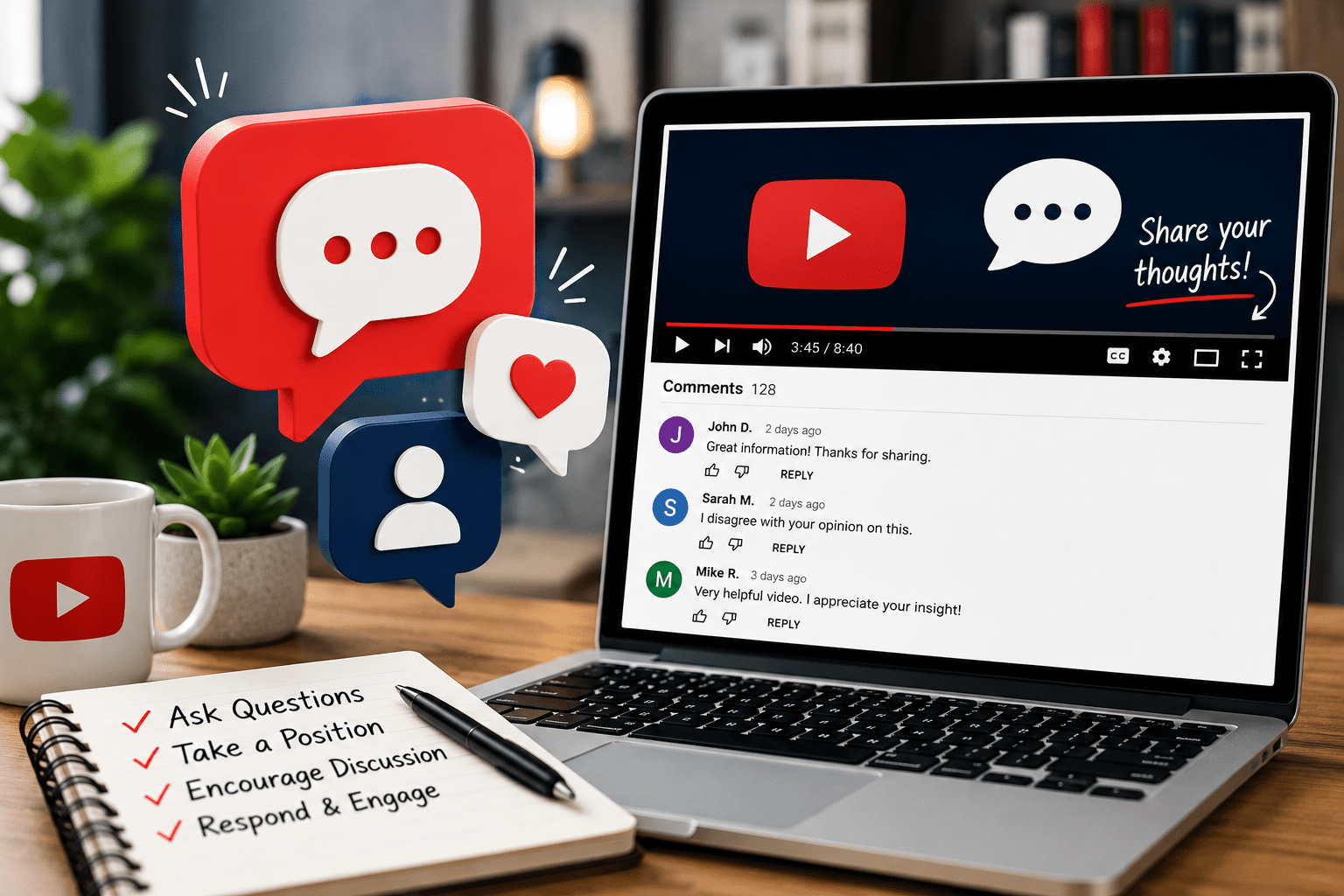
You want viewers to leave comments on your videos.
You want viewers interacting with you, asking questions, sharing opinions, and engaging with other viewers on YouTube. Comments are one of the clearest signs that people are paying attention to your content and finding value in what you have to say.
One of the biggest mistakes many lawyers and law firms make is turning comments off completely. Don’t do that.
If someone watches your educational video and wants to thank you, ask a question, or even challenge your opinion, you want to give them the opportunity to engage. Disabling comments cuts off that interaction and removes an important engagement signal from your content.
I encourage viewers to leave comments. I want them to tell me what they liked, what they didn’t like, whether they agree, and whether they disagree.
You may not always like what people have to say, but interaction matters.
Why You Want Viewers To Leave Comments On Your YouTube Videos
Think about the videos you watch online.
Which ones get people talking?
Usually, they are not the bland videos that simply state facts and move on. They are videos that educate, explain, take a position, and invite conversation.
If your videos are completely “vanilla,” people rarely feel compelled to comment.
People won’t rush to share them.
Viewers are unlikely to debate them.
Most won’t remember them for very long.
That doesn’t mean you should become controversial just to create engagement. That is not the point.
Instead, create educational content with perspective.
Take a stand.
Share your opinion.
Explain why you believe what you believe.
Viewers appreciate authenticity.
For example, imagine your state’s highest court issues an important ruling that affects injury victims or wrongful death claims. You create a video explaining what changed and how it impacts potential clients.
After explaining the decision, tell viewers what you think.
Do you agree?
Do you disagree?
Why?
Then ask your audience:
“What do you think? Leave your opinion in the comments below.”
That simple invitation often creates engagement.
Stop Creating Videos That Don’t Spark Discussion
Many attorneys create videos that are technically accurate but emotionally flat.
They explain a topic.
Give information.
End the video.
And that’s it.
If you want comments, you need to create a reason for people to participate.
Talk about:
- New laws affecting injury victims
- Recent court rulings
- Insurance changes
- Legal trends
- Consumer protection issues
- Topics clients are already discussing
Then tell viewers how you feel.
Your opinion may not be popular.
That is okay.
People respect conviction.
You can acknowledge that viewers may think differently while still standing by your position.
That creates discussion.
Discussion creates engagement.
Engagement creates community.
Ask Viewers To Leave Comments
This sounds simple, but many creators forget to do it.
If you want comments, ask for them.
Invite viewers into the conversation.
Try questions such as:
- What do you think about this ruling?
- Do you agree with this decision?
- Have you dealt with something similar?
- What questions do you have?
- Leave your thoughts below.
People often need permission to participate.
Give it to them.
Encourage it.
Make comments part of your process.
One Important Warning: Respond To Every Comment
If you invite people to leave comments, you need to monitor them.
Check your YouTube dashboard regularly.
Look for new responses.
Reply to people.
Remember, they took time out of their day to watch your content and interact with you.
Responding builds trust.
Your reply does not need to be long.
Sometimes it is as simple as:
“Thank you for taking the time to watch and leave a comment.”
Other times you may want a more detailed response.
The key is consistency.
How To Handle Negative YouTube Comments
Not every comment will be positive.
That’s part of creating content.
Here are some simple guidelines on handling youtube comments:
Remove Abusive Comments
If someone becomes abusive, threatening, or uses offensive language, remove the comment and block the user if necessary.
You do not need to tolerate harassment.
Remove Racist Or Hateful Content
Delete it.
Protect your community.
Keep Constructive Disagreement
If someone disagrees with you, consider it an opportunity.
Teach.
Explain.
Share your reasoning.
Just because someone disagrees does not mean the conversation has no value.
Thank Supporters
If someone compliments your video or thanks you for the information, acknowledge them.
Those moments matter.
Don’t Panic Over Criticism
Criticism happens.
Leave reasonable criticism up.
Respond professionally.
Explain your thinking.
Thank the viewer for participating.
Think about online reviews.
If every review is perfect, people become skeptical.
A mix of opinions feels authentic.
Comments work the same way.
Take A Position And Explain Your Why
One of the biggest reasons viewers engage is because they understand where you stand.
Don’t be wishy-washy.
Explain:
- Why you agree with a ruling
- Why you disagree
- Why the issue matters
- Why clients should pay attention
Your “why” builds credibility.
Passion creates trust.
And trust creates engagement.
Many lawyers worry:
“What if someone disagrees and I lose cases?”
In my experience, viewers often appreciate someone willing to take a position.
Even when they disagree.
Authenticity attracts attention.
Expect Negative Comments Without Letting Them Control You
Years ago, I checked comments on one of my educational videos.
Most were positive.
One was not.
It was threatening.
The video itself was educational and completely harmless, but the viewer was upset with the legal system and focused that frustration personally.
I documented the comment.
Took screenshots.
Deleted it.
Blocked the user.
Reported it.
Then moved on.
The lesson?
Some comments will upset you.
Some will frustrate you.
Don’t let them ruin your day.
Focus on the people you are helping.
Educational Content Creates More Engagement
Here is the most important lesson:
Create great educational content.
Help your viewers understand how their case works.
Answer their questions.
Explain difficult topics.
Teach.
Do it in an interesting way.
Avoid turning every video into a commercial about your law firm.
Focus on your viewer.
Focus on what they need.
When people see that you understand their problems and explain them clearly, they begin to trust you.
That trust often turns into engagement.
And engagement leads to comments.
Final Thoughts On Getting Viewers To Leave Comments On Your YouTube Videos
If you want viewers to leave comments on your YouTube videos:
- Ask for comments
- Encourage discussion
- Take a position
- Explain your reasoning
- Respond consistently
- Accept criticism
- Keep teaching
- Create educational content that serves your audience
Comments are not just about engagement.
They are about building relationships.
The more conversations you create, the stronger your video community becomes.
And that is what keeps viewers coming back.
Till next time, see you on video!
